 EN
EN


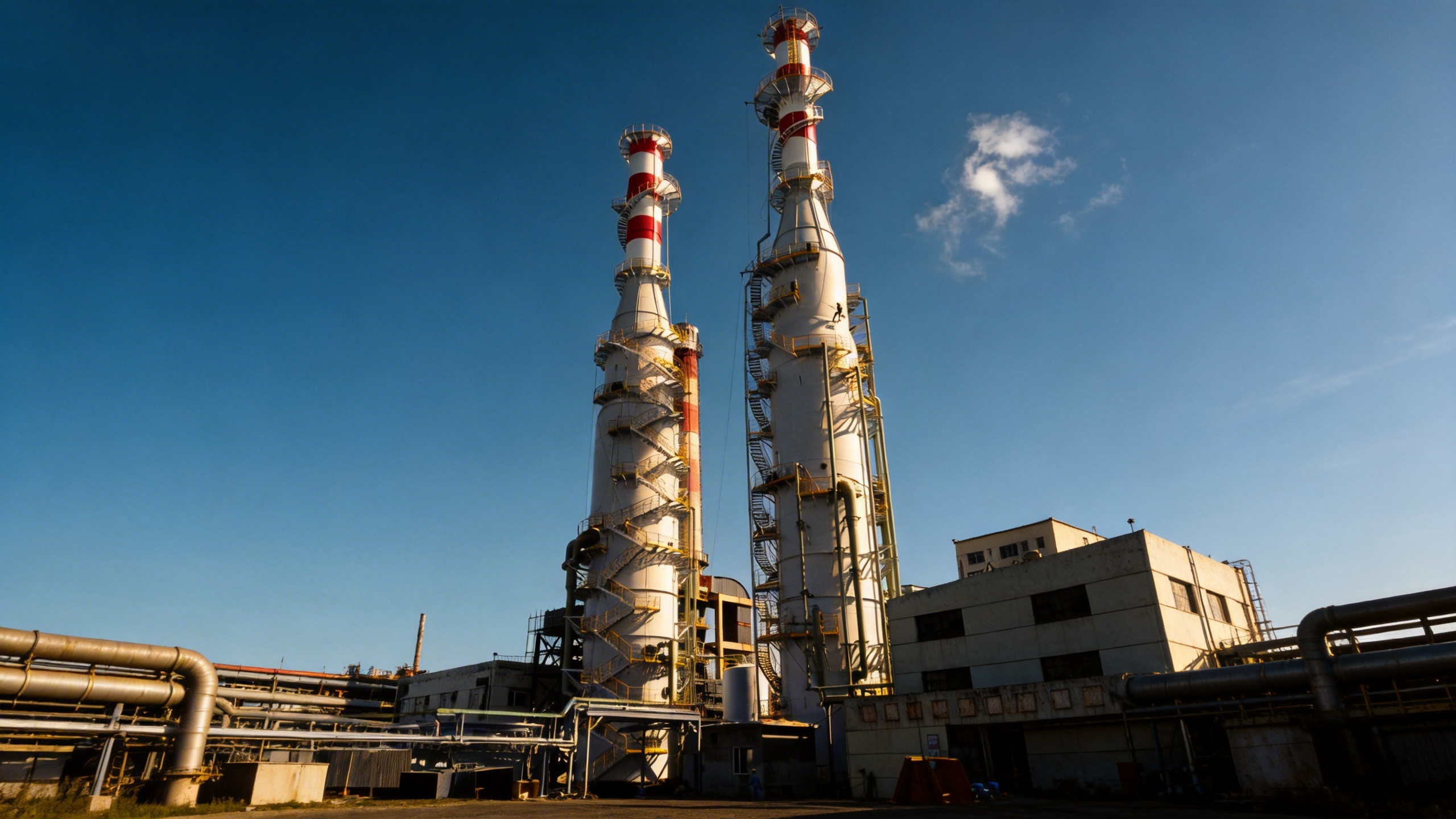
For a long time, there has been a simple assumption in power plant desulfurization: high-sulfur coal requires ammonia-based technology, while low-sulfur coal can be handled economically with calcium-based desulfurization.
That assumption is becoming increasingly difficult to justify.
With tighter emission requirements, stricter solid-waste management, and growing attention to carbon costs, power plants are looking beyond whether their existing system can meet today's emission limits. They are also asking whether it can remain economically and operationally sustainable in the years ahead.
This is where ammonia desulfurization deserves a closer look.
Why Can Ammonia Desulfurization Handle Different Coal Qualities?
The adaptability of ammonia desulfurization comes largely from its reaction mechanism.
Traditional calcium desulfurization involves gas-solid-liquid reactions. The dissolution rate of limestone and the efficiency of mass transfer can affect the overall reaction process. As sulfur dioxide concentrations increase, the system may require higher slurry circulation rates and more demanding operating conditions.
Ammonia desulfurization, by comparison, is primarily a gas-liquid reaction. Sulfur dioxide dissolves readily and reacts rapidly with ammonia, allowing the absorption process to proceed efficiently without the same reaction-rate limitations associated with limestone-based systems.
This makes ammonia-based technology suitable for a wide range of coal qualities.
In practical applications, advanced ammonia desulfurization systems can achieve desulfurization efficiencies above 95% under low-, medium-, and high-sulfur coal conditions. Ammonia recovery rates of 97% or higher can also help maintain the economic performance of the system.
For plants where coal quality changes over time, this flexibility can be particularly valuable. The plant does not need to redesign its basic desulfurization strategy every time the sulfur content of the fuel changes.
Low-Sulfur Coal Still Requires a Full-Cost Calculation
A common argument is straightforward: if low-sulfur coal already produces relatively low SO₂ emissions and a calcium-based system can meet the applicable limits, why change the process?
The answer lies in the total operating cost rather than sulfur concentration alone.
1. Gypsum Disposal Remains an Operating Cost
Calcium-based desulfurization generates gypsum as a by-product. A low-sulfur coal plant may produce less gypsum than a high-sulfur coal plant, but the resulting handling, storage, transportation, and disposal requirements do not disappear.
As solid-waste management requirements become stricter, these costs deserve to be included in any long-term evaluation of a flue gas desulfurization system.
2. Carbon Costs Do Not Depend on Coal Type Alone
Another consideration is the carbon impact associated with calcium-based desulfurization.
According to the chemical stoichiometry described for the process, absorbing one tonne of SO₂ releases approximately 0.75 tonnes of CO₂. This relationship is associated with the reaction itself rather than whether the plant burns high- or low-sulfur coal.
As carbon markets develop, the economic implications of these emissions can become increasingly relevant to power plant operators.
3. By-Product Economics Can Change the Equation
The economics of a desulfurization system should also consider what happens to its by-products.
With calcium-based systems, gypsum generally represents a material that needs to be managed. With ammonia desulfurization, sulfur can instead be recovered in the form of ammonium sulfate.
Even when a low-sulfur coal plant produces a relatively small quantity of ammonium sulfate, the by-product has potential commercial value. This changes the way the operating economics of the system can be evaluated.
Coal Quality Is Becoming Less Predictable
Fuel procurement is another reason why coal-type adaptability matters.
Many power plants cannot guarantee a single, consistent coal quality over the entire operating life of the facility. Market conditions, supply availability, and fuel costs can lead to the use of different coal grades or blended fuels.
A desulfurization system therefore needs to accommodate changes in inlet SO₂ concentration without compromising stable operation.
This is one area where ammonia desulfurization can provide operational flexibility.
Because of its rapid reaction kinetics, ammonia-based technology can respond effectively to variations in sulfur dioxide concentration. Instead of designing the system around one fixed coal quality, operators can have greater flexibility when selecting and blending fuels.
In this sense, a calcium-to-ammonia conversion is not simply a process upgrade. It can also give a power plant greater flexibility in future fuel procurement.
Has Ammonia Desulfurization Really Crossed the Coal-Type Barrier?
The idea that ammonia-based flue gas treatment is only suitable for high-sulfur coal no longer reflects the full range of applications of the technology.
Ammonia desulfurization has been applied under different coal and operating conditions, including plants using relatively high-sulfur fuels as well as facilities operating primarily with lower-sulfur coal.
For an established power plant, the decision to adopt an ammonia-based FGD system should therefore not be based on sulfur content alone.
A more complete assessment should consider:
SO₂ concentration and its expected variation
Existing FGD system performance
Gypsum generation and disposal requirements
Wastewater treatment requirements
Carbon-related operating costs
Ammonia consumption and recovery
By-product utilization
Future fuel procurement flexibility
Long-term environmental compliance
Calcium-to-Ammonia Conversion: More Than a Desulfurization Upgrade
For plants currently operating calcium-based desulfurization systems, conversion to ammonia-based technology can be evaluated as a broader optimization project rather than simply a replacement of one absorbent with another.
The objective is not only to achieve the required sulfur dioxide removal efficiency. It is also to improve the overall balance between environmental performance, operating cost, by-product management, and future fuel flexibility.
MingSheng Environmental Protection draws on decades of chemical engineering experience and seven generations of technology development in ammonia-based flue gas treatment. The technology has been applied across different coal-quality conditions, supporting stable desulfurization performance and ammonia recovery.
The key point is simple: coal sulfur content should not be the only factor used to determine whether ammonia desulfurization is suitable.
For today's power plants, the more important question is whether the existing FGD system can continue to deliver stable environmental performance while controlling the total cost of operation under changing regulatory, carbon, and fuel-market conditions.
That is why calcium-to-ammonia conversion is attracting attention not only from high-sulfur coal plants, but also from operators using medium- and low-sulfur coal.