 EN


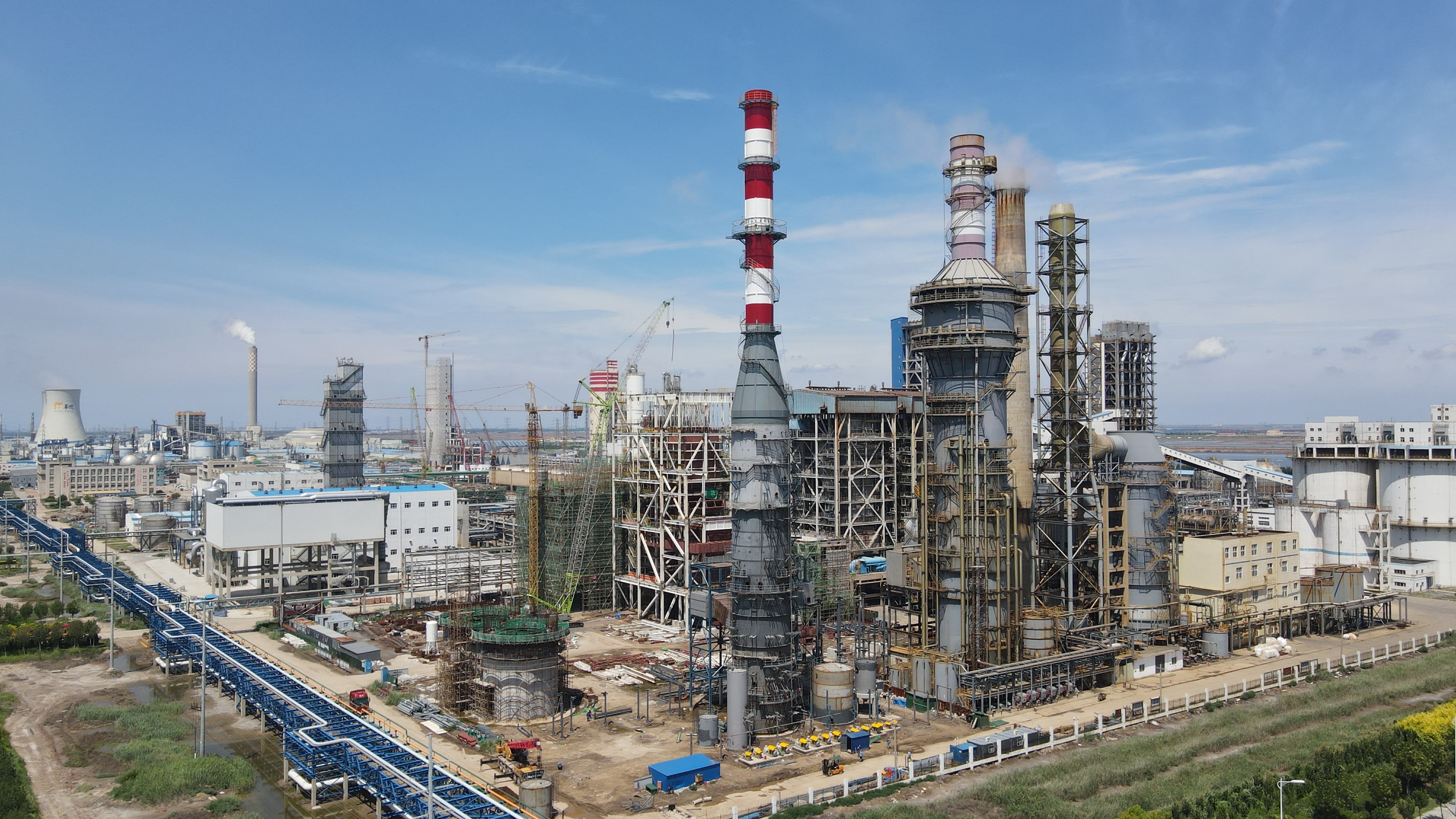
For decades, limestone-gypsum technology has been the dominant approach to flue gas desulfurization in China. Ammonia desulfurization, meanwhile, has attracted interest for its potential to combine efficient sulfur dioxide removal with resource recovery. Yet despite these advantages, its adoption has historically been limited by several engineering challenges.
That picture is changing.
Advances in process design, equipment development, and operating control are helping ammonia-based flue gas desulfurization overcome long-standing technical barriers. MingSheng Environmental Protection has been working in this field for more than a decade, advancing its technology through seven generations of development and expanding its applications across a range of industrial sectors.
The shift is important for plant operators looking for ways to balance emission compliance, operating costs, and long-term environmental performance.
Why Has Ammonia Desulfurization Taken Time to Gain Ground?
Ammonia desulfurization has several attractive characteristics. The process can be relatively compact, uses ammonia to absorb sulfur dioxide, and can recover sulfur in the form of ammonium sulfate, a valuable fertilizer-related product.
Compared with limestone-gypsum systems, it also offers the potential to reduce the need for gypsum disposal and avoid some of the wastewater treatment challenges associated with calcium-based processes.
However, these advantages do not automatically translate into reliable industrial operation. The technology must address practical challenges, including aerosol formation, ammonia slip, stable performance under high-dust conditions, and effective treatment of flue gas with high sulfur dioxide concentrations.
Oxidation efficiency and the control of visible plume formation downstream of the absorber are also important considerations in system design.
For industrial users, the decisive question is not whether a technology looks promising in theory. It is whether the system can maintain reliable performance under actual operating conditions while meeting emission requirements and controlling total operating costs.
Seven Generations of Technology Development
MingSheng Environmental Protection has continued to refine its ammonia-based flue gas desulfurization technology through seven generations of development.
The work has focused on several of the technical issues that have historically constrained ammonia desulfurization, including the treatment of high-sulfur flue gas, adaptation to large gas volumes, improved oxidation efficiency, aerosol control, and the management of ammonia slip.
These are not isolated design considerations. They influence how the entire FGD system performs, from gas-liquid contact and reaction efficiency to downstream emissions and day-to-day operating stability.
The technology has been applied in chemical manufacturing, power generation, steel, carbon materials, papermaking, and coking. This range of applications reflects the need to adapt process configurations to different gas compositions, operating conditions, and production requirements.
For an FGD system manufacturer, the challenge is therefore broader than supplying an absorber or a set of equipment. Process design, equipment integration, control strategy, and commissioning all contribute to the final result.
The Economics: Looking Beyond Initial Investment
The economic case for ammonia desulfurization should be assessed across the entire operating cycle, rather than by comparing equipment purchase prices alone.
Capital investment is one part of the calculation. Operating expenses, maintenance, by-product handling, wastewater management, and the potential value of recovered products also matter.
One important difference lies in the by-product.
Limestone-gypsum desulfurization produces gypsum, which may require further utilization or disposal depending on its quality and local market conditions. Ammonia desulfurization can produce ammonium sulfate, which can be used in fertilizer production when it meets the necessary product specifications.
This creates a potential route for sulfur resource recovery. Rather than treating the sulfur removed from flue gas solely as a pollutant to be managed, the process can convert it into a material with commercial uses.
The actual economic benefit depends on factors such as ammonia consumption, energy use, equipment configuration, local by-product markets, and the costs associated with the existing treatment system. These factors should be evaluated for each project rather than assumed to be identical across all applications.
As domestic technology continues to mature, ammonia-based systems are becoming more competitive in selected operating conditions. For some projects, they may offer an attractive alternative to conventional calcium desulfurization.
Integrating Desulfurization with SCR Denitrification
Another potential advantage is the opportunity to coordinate ammonia desulfurization with a selective catalytic reduction (SCR) denitrification system.
Both processes use ammonia, although their reaction mechanisms and operating requirements differ. Where the process configuration and safety design permit, an integrated ammonia supply arrangement may help simplify parts of the overall system and make better use of available space.
This can be particularly relevant when upgrading older boilers or industrial facilities where space is limited.
However, integration requires careful engineering. Ammonia demand, storage and handling, control logic, safety provisions, and the operating requirements of each treatment stage must all be considered. Shared infrastructure should be adopted only where the specific project conditions support it.
A well-designed combination of desulfurization and denitrification can help operators approach flue gas treatment as a coordinated system rather than a collection of independent processes.
Applications Across Multiple Industries
Ammonia-based flue gas desulfurization is not limited to one type of industrial facility.
MingSheng's technology has been applied in sectors including chemical manufacturing, power generation, steel, carbon materials, papermaking, and coking. Each sector presents different requirements in terms of gas volume, sulfur dioxide concentration, dust loading, operating schedules, and available installation space.
For example, an upgrade at an existing power plant may place particular emphasis on space constraints and integration with existing equipment. A chemical plant may have different process conditions and requirements for continuous operation. In steelmaking or coking, the variability of flue gas conditions can make operating stability and process control especially important.
The right solution therefore begins with a detailed assessment of the application, rather than the assumption that one standard configuration will suit every facility.
A Broader Role in Sustainable Flue Gas Treatment
Industrial emission control is increasingly evaluated through a wider lens. Removal efficiency remains essential, but operators are also considering resource utilization, by-product management, energy consumption, and long-term operating costs.
Ammonia desulfurization offers a potential combination of sulfur dioxide removal and resource recovery. Its future development will depend on continued engineering improvements, reliable operation, and project-specific economic performance.
MingSheng Environmental Protection is drawing on decades of chemical engineering experience to advance this approach and expand its industrial applications.
For companies evaluating a new FGD system or considering an upgrade to an existing installation, ammonia desulfurization deserves to be assessed on its actual technical and economic merits.
The goal is not simply to remove sulfur dioxide. It is to develop a flue gas treatment system that delivers reliable environmental performance while making more effective use of resources throughout its operating life.