 EN


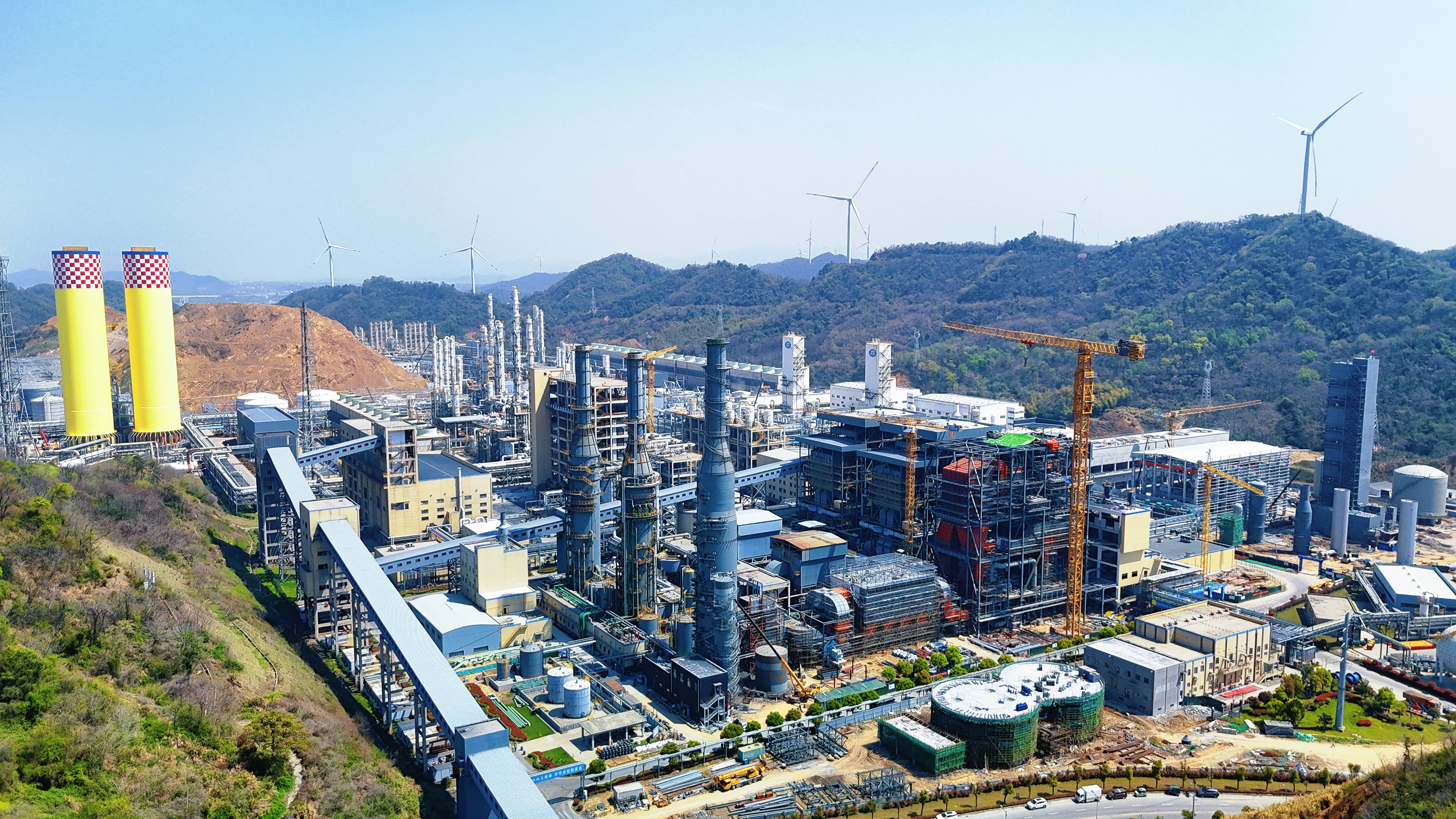
For years, many industrial plants have followed a familiar approach to emission control:
Use limestone-gypsum technology for flue gas desulfurization (FGD) and use an SCR system for nitrogen oxide reduction.
This combination has played an important role in achieving emission compliance.
However, as environmental requirements continue to become stricter, companies are beginning to reconsider whether traditional systems can meet future challenges in the most efficient way.
One of the key issues attracting attention is ammonia slip.
When SCR systems operate, ammonia injection must be carefully controlled. Too little ammonia may result in insufficient NOx removal. Too much ammonia may increase ammonia slip, causing operational and environmental concerns.
The balance between NOx control and ammonia emission control is becoming increasingly important.
This is why more companies are looking at ammonia desulfurization and calcium-to-ammonia conversion as a potential solution.
Ammonia Slip Has Changed the Way Companies View Emission Control
Traditionally, the main focus of a denitrification system was simple:
Ensure NOx emissions meet regulatory requirements.
However, the increasing focus on ammonia emissions means that operators now need to consider the entire emission control chain.
A modern industrial flue gas treatment system must not only achieve sulfur dioxide removal and NOx reduction, but also control secondary impacts associated with excessive ammonia injection.
For plants using limestone-based FGD combined with SCR denitrification, this creates a dual challenge:
Maintain stable NOx removal performance
Keep ammonia slip within increasingly strict limits
Improving injection control can help, but it does not change the fundamental structure of a system where desulfurization and denitrification operate separately.
Calcium-to-ammonia conversion provides a different approach.
Calcium-to-Ammonia Conversion: Changing the Technical Route
Calcium-to-ammonia conversion is not simply an adjustment to ammonia injection.
It represents a change in the overall flue gas treatment route.
In an ammonia desulfurization process, ammonia is used as the absorbent to react with sulfur dioxide and produce ammonium sulfate.
This creates two important changes.
First, ammonia becomes part of both sulfur dioxide removal and nitrogen oxide reduction processes.
Second, the sulfur removed from flue gas can be converted into a useful by-product instead of being managed only as waste.
By integrating ammonia supply and improving system coordination, plants can move from separate pollution control processes toward a more integrated approach.
Advanced Ammonia Desulfurization Technology for Better Control
One of the challenges historically limiting ammonia desulfurization has been ammonia and ammonium salt control.
MingSheng Environmental Protection has developed its cascade separation and purification ammonia desulfurization technology to address this issue.
The system applies multi-stage ammonia and ammonium salt washing combined with advanced demisting processes to reduce ammonia and ammonium salt emissions.
The company’s seventh-generation technology further improves the purification process through optimized separation and control methods.
According to project applications, the technology has demonstrated stable operation with high sulfur dioxide removal efficiency, high ammonia recovery performance, and controlled particulate emissions.
These improvements are important because industrial operators evaluate an FGD system not only by removal efficiency, but also by:
Long-term operating stability
Maintenance requirements
By-product management
Environmental compliance
Total operating cost
Beyond Pollution Control: Turning Sulfur Into Value
Another major difference between calcium desulfurization and ammonia desulfurization is the treatment of by-products.
Traditional limestone-gypsum FGD produces gypsum. Depending on quality and market conditions, gypsum may require further utilization or disposal.
Ammonia desulfurization produces ammonium sulfate, which can be used as a fertilizer-related product.
This changes the economic logic of the system.
Instead of paying only for pollutant removal, companies can consider whether recovered materials can create additional value.
For industrial facilities operating continuously for many years, this resource recovery potential can become an important part of the overall investment evaluation.
Upgrading Existing FGD Systems Without Starting Over
A common concern among plant operators is whether adopting ammonia desulfurization requires complete reconstruction.
In many cases, the answer is no.
Calcium-to-ammonia conversion focuses on upgrading existing limestone-gypsum FGD systems through targeted modifications.
Depending on the original system configuration, existing equipment and infrastructure may be reused.
Typical upgrade areas may include:
Absorption tower modifications
Oxidation and concentration systems
Spray systems
Ammonia supply facilities
By-product recovery equipment
This approach allows companies to make better use of existing environmental assets while moving toward a more advanced treatment route.
For aging industrial facilities, this can be an important advantage.
Shared Ammonia Supply: Integration Creates Efficiency
One additional benefit of calcium-to-ammonia conversion is the possibility of integrating ammonia supply between desulfurization and SCR denitrification systems.
Previously, many plants managed limestone consumption for FGD and ammonia supply for SCR separately.
An integrated ammonia-based approach can simplify procurement, storage, and operational management.
However, successful integration requires careful engineering design. Ammonia storage, safety systems, process control, and operating requirements must all be considered.
The goal is not simply to combine two processes, but to create a more coordinated emission control system.
The Future of Industrial Flue Gas Treatment
The role of environmental equipment is changing.
In the past, companies mainly focused on whether a system could achieve emission standards.
Today, they are asking broader questions:
Can operating costs be reduced?
Can waste streams be minimized?
Can existing equipment be upgraded?
Can pollutants become resources?
Ammonia desulfurization represents this changing direction.
By combining sulfur dioxide removal, ammonia utilization, by-product recovery, and potential integration with denitrification systems, it provides a different pathway for industrial emission control.
For companies evaluating future upgrades of their power plant FGD or industrial air pollution control systems, calcium-to-ammonia conversion offers a new perspective.
Environmental compliance and economic performance do not necessarily have to be opposite goals.
With the right technology approach, they can support each other.
Table of Contents
- Ammonia Slip Has Changed the Way Companies View Emission Control
- Calcium-to-Ammonia Conversion: Changing the Technical Route
- Advanced Ammonia Desulfurization Technology for Better Control
- Beyond Pollution Control: Turning Sulfur Into Value
- Upgrading Existing FGD Systems Without Starting Over
- Shared Ammonia Supply: Integration Creates Efficiency
- The Future of Industrial Flue Gas Treatment