 EN


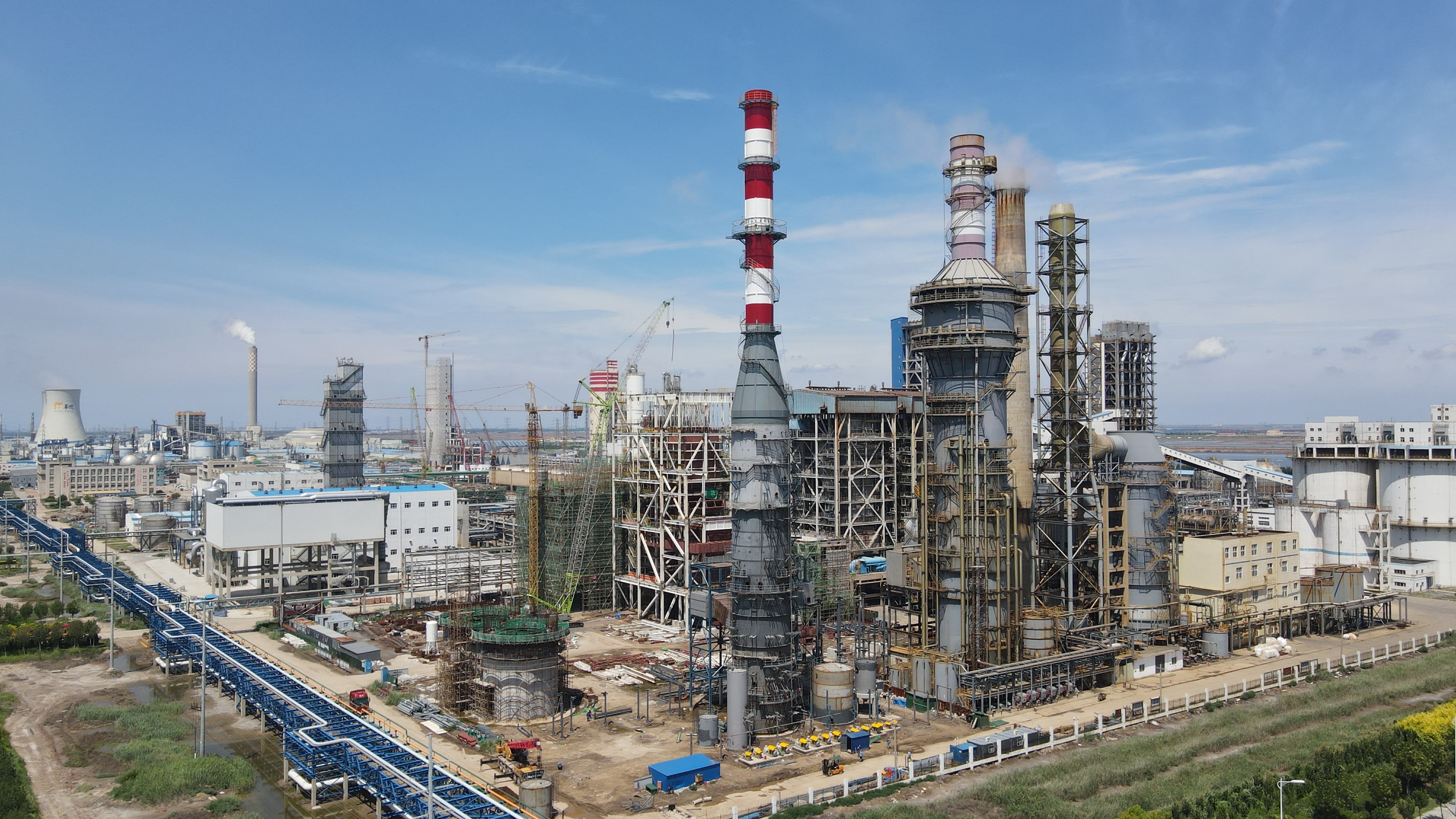
An operating limestone-based flue gas desulfurization (FGD) tower can become a difficult asset to evaluate. Demolishing it may waste serviceable infrastructure, while keeping the existing process unchanged can leave a plant exposed to rising operating costs and tighter environmental requirements.
For operators considering ammonia desulfurization, several questions usually come first:
Can the existing tower be reused?
How much modification is required?
How long will the retrofit take?
Will the investment deliver a measurable operating benefit?
In many cases, an existing limestone-gypsum FGD tower can be considered for calcium-to-ammonia conversion without complete demolition and reconstruction. The final decision, however, depends on the tower’s structural condition, dimensions, process configuration, corrosion history, and available space.
Why Plants Are Reassessing Existing FGD Systems
Traditional limestone-gypsum FGD technology has been widely used for sulfur dioxide removal. But an established process is not automatically the most economical option for every plant over its entire operating life.
Operators increasingly need to assess several costs together:
Limestone procurement and handling
Gypsum storage, transport, utilization, or disposal
Wastewater treatment
Energy consumption and equipment maintenance
Carbon-related costs and future compliance requirements
Ammonia slip from a plant’s SCR denitrification system can add another layer of operational pressure. Although a limestone-based FGD tower does not itself use ammonia as the desulfurization absorbent, plants often operate FGD and SCR systems at the same site. Managing sulfur dioxide removal, nitrogen oxide emissions, and ammonia slip therefore requires coordination across the overall flue gas treatment process.
For some facilities, this is prompting a closer look at ammonia desulfurization and the possibility of upgrading existing equipment rather than replacing the entire system.
The Retrofit Principle: Reuse What Works, Modify What Matters
Calcium-to-ammonia conversion is not simply a matter of changing the absorbent. The process design must accommodate the different reaction, oxidation, concentration, crystallization, and by-product recovery requirements of ammonia desulfurization.
The good news is that some parts of the existing installation may remain useful.
1. Assess the Existing Tower and Infrastructure
The foundation, tower shell, selected pipelines, and plant buildings may be suitable for reuse, subject to a detailed engineering inspection.
The assessment should cover structural integrity, corrosion, operating temperature, gas flow, pressure drop, available space, and compatibility with the proposed process. Reuse should be based on verified conditions rather than assumed from the tower’s appearance or service history.
2. Modify the Key Process Sections
Traditional limestone-based systems often use a spray tower configuration. Depending on the existing tower’s height and internal arrangement, an ammonia-based process may require tower extension or a series-connected configuration.
Potential modifications include:
Adding concentration and oxidation sections
Installing or rearranging spray layers
Upgrading oxidation air and circulation systems
Providing suitable equipment for ammonium sulfate recovery
Improving mist elimination and control of ammonia or ammonium salt carryover
The exact scope varies from project to project. A retrofit design should be based on the required treatment capacity, inlet flue gas conditions, emission targets, and the physical limitations of the existing installation.
3. Integrate Ammonia Supply and By-Product Handling
Where an SCR system already uses ammonia, the existing supply infrastructure may provide opportunities for integration. However, common supply arrangements must be evaluated against process demand, storage capacity, safety requirements, and operational independence.
The retrofit must also account for ammonium sulfate handling, crystallization, storage, and product quality. By-product recovery creates value only when the product meets relevant specifications and a viable utilization or sales channel is available.
How Long Does an FGD Retrofit Take?
Shutdown planning is often as important as equipment selection. Extended downtime can disrupt production, so the construction sequence needs to be developed around the plant’s operating schedule.
MingSheng Environmental Protection states that typical calcium-to-ammonia conversion projects can be completed within 90–120 days. This is a project reference, not a universal guarantee. Actual duration depends on the amount of structural modification, equipment procurement, site access, construction conditions, commissioning requirements, and the shutdown window available.
Depending on the plant layout, staged construction, work during planned outages, and coordinated installation schedules may help reduce the impact on the main production unit.
A reliable project schedule should be established only after the existing equipment has been inspected and the retrofit scope has been defined.
Where the Economic Benefits Can Come From
The first potential benefit is capital expenditure. Reusing suitable foundations, tower structures, piping, and buildings can reduce the need for new civil works and avoid some costs associated with demolition.
The second is the change in by-product management.
Limestone-gypsum FGD produces gypsum, which may require handling, transportation, utilization, or disposal. Ammonia desulfurization produces ammonium sulfate, which may have commercial value when product quality and market conditions are favorable.
The conversion can therefore change the cost structure in several ways:
| Cost or value item | What to evaluate |
|---|---|
| Civil construction | Savings from reusing existing structures |
| Limestone and gypsum | Reduced limestone use and potential changes in disposal costs |
| Wastewater | Whether the proposed process reduces wastewater generation and treatment needs |
| Energy consumption | Fan power, circulation pumps, oxidation equipment, and overall system pressure drop |
| Ammonia consumption | Reagent demand, recovery performance, and procurement costs |
| Ammonium sulfate | Product quality, recovery costs, logistics, and market price |
These items should be assessed together. Claims that wastewater, solid-waste, or carbon-related costs will fall to zero should not be assumed for every installation without confirming the process design, applicable accounting rules, and actual site conditions.
A project-specific financial model should compare the existing system with the proposed retrofit, including capital expenditure, annual operating costs, expected by-product revenue, downtime, and maintenance.
Process Performance Must Be Verified
MingSheng Environmental Protection reports that its calcium-to-ammonia conversion technology can achieve a sulfur dioxide removal rate of more than 99.5%, an ammonia recovery rate of at least 99%, and outlet particulate concentrations below 5 mg/Nm³ under its stated technology and project conditions.
These figures should be assessed against the actual design basis and verified through agreed performance testing. Results can vary with inlet pollutant concentrations, gas volume, operating conditions, equipment configuration, and measurement methods.
For an FGD system manufacturer or retrofit contractor, the objective is not simply to install new equipment. It is to deliver stable operation, meet the agreed emission requirements, and establish a process that remains maintainable throughout its service life.
A Second Life for Existing Environmental Assets
An old FGD tower does not automatically need to become a stranded asset. When its structure and equipment remain suitable, calcium-to-ammonia conversion may offer a practical alternative to complete replacement.
The key is a disciplined engineering process: inspect the existing installation, identify reusable components, define the necessary process changes, plan the shutdown, and evaluate the long-term economics.
For plants facing tighter emissions requirements and increasing pressure to control operating costs, the most practical upgrade may not be to start from scratch. It may be to make better use of what is already there.
The real value of an FGD retrofit lies not in keeping the old tower unchanged, but in turning existing infrastructure into part of a more efficient and resource-oriented flue gas treatment system.